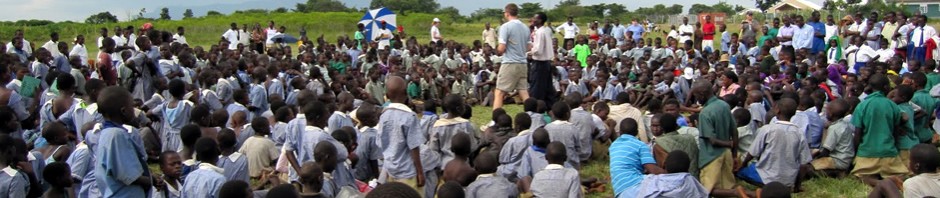
Church Planting & Discipleship is one of the core ministries of the Mbale Mission Team. Since our beginning in 1995, we have continually emphasized evangelism and leadership development. In fact, we consider CPD to be the backbone of our work.
What is CPD?
Much of our team’s time, energy, finances, and personnel are focused on evangelism, visiting churches, teaching seminars, organizing programs and ministries, providing benevolence, mediating disputes, conducting discipleship programs, encouraging women’s ministry, and developing an extensive communication system.
What do you teach?
A unified teaching program builds a common identity and helps develop a strong foundation for each church. Our program includes three 2-day seminars that all new churches are required to host. These are: Foundational Teachings of Faith, Salvation, and Making Jesus Lord of My Life.
Foundational Teachings of Faith (FTF)
An eight-lesson series on the basic Christian topics of God, Christ, Holy Spirit, Salvation, Church, Christian Living, Satan and the Bible.
Salvation (SAL)
A six-lesson, expanded seminar on The Problem of Sin, God’s Response to Sin, Our Response to God’s Gift, Faith, Repentance and Confession & Baptism.
Making Jesus Lord of My Life (MJL)
A seven lesson series provides scriptural guidance on how to make Jesus Lord of our lives in worship, finances, family, citizenship, work, and friendships.
How many churches are there?
The Mbale-based CPD currently works with more than 450 churches in Uganda, Kenya, Sudan, and Tanzania.
How do you define “church”?
A group of believers is “officially” considered a church (by us—God certainly is the one providing the ultimate definition!) when it has completed all three church seminars and indicated its agreement with these teachings.
However, the rural groups that we work with cover a wide continuum of age and maturity. Therefore, several terms and definitions are helpful in order to identify and measure the development of groups of Christians in a village setting and to accurately report progress.
Consider the problem of what to call a fledgling group of Christians not yet meeting for worship on Sundays. Calling them a church seems premature. So, we use the terms contact, preaching point, infant church, developing church, and mature church to describe stages of church growth from our initial contact to ordaining evangelists, elders and deacons.
How is CPD organized?
As the work has grown, it has been necessary to develop a more complex methodology to facilitate continued growth. When the number of churches moved beyond our ability to visit all of them within a month, or even a year, we had to find a way to continue to nurture and encourage growth. So we developed the idea of church “clusters.”
What is a church cluster?
We use this term to identify a group of village churches near each other in a small geographical area. Churches within a cluster are usually connected by tribal, cultural, or linguistic similarities.
We want to promote cooperation, fellowship, and partnership between local churches in order to reduce dependence on foreign missionaries. Clusters of churches have much a better chance of surviving and thriving than individual churches disconnected from each other. Over the last 15 years, this principle has already proven itself. Churches active in cluster fellowship have grown and flourished where independent, solitary churches have struggled or died out completely.